素材記事: https://neurosciencenews.com/rostral-prefrontal-cortex-creativity-30636/
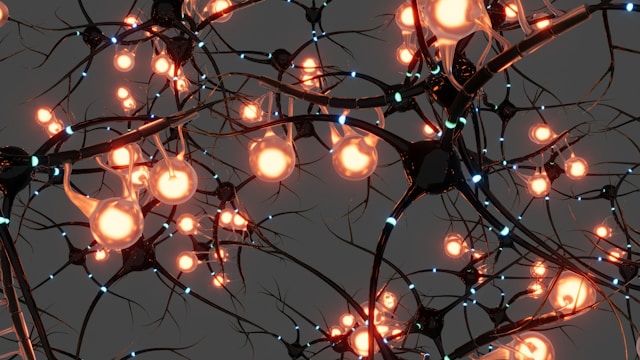
素材写真: UnsplashのBhautik Patelが撮影した写真のBhautik Patelが撮影したイラスト素材
Neurocognitive science research on creativity has really come a long way. Here’s a report from a French brain research institute.
While there are business professors who study innovation and creativity, they aren’t cognitive scientists or psychologists, so they’re not familiar with this area. On the other hand, there are cognitive scientists and psychologists whose research focuses on this field, but they aren’t familiar with business. Since I have a foot in both camps, I’ll continue to serve as a bridge between the two fields.
“For years, neuroscientists have pointed to a ‘dynamic cooperation’ between two opposing systems: the Default Mode Network (DMN), which handles spontaneous associations, and the Executive Control Network (ECN), which focuses on goal-oriented thinking.” Neuroscientists have long believed this to be the source of creativity. The cutting edge of research now focuses on how these two functions bridge the gap.
In this study, it states, “The Rostral Bridge: Located at the very front of the brain, the rostral prefrontal cortex acts as a gradual transition zone, ensuring the ‘dreamy’ DMN and the ‘logical’ ECN can communicate without merging.” It appears that a neural region that literally acts as a bridge has been identified.
The key point here is that these regions “cooperate while maintaining independence and a certain distance.” It’s interesting that they do not “merge into one another”—the phrase “without merging” is particularly noteworthy. It’s also intriguing that when information exchange between these two regions merges, there is a tendency for frontotemporal dementia to progress.
It’s kind of like human relationships, isn’t it? If people become too close, it can actually lead to confusion and a lack of stimulation, but when they maintain a healthy distance and stimulate each other while remaining independent, that’s where innovation emerges. In the context of organizational development, “psychological safety” is the same concept. Many people mistake this for “complacency,” but it’s completely different.
進んできたなぁ、クリエイティビティに関する神経認知科学研究の最前線。フランスの脳研究所からの報告です。
イノベーションやクリエイティビティの研究を行う経営学教授はいますが、彼らは認知科学者や心理学者じゃないのでこの辺りは不案内。一方で、この分野に研究ドメインを置く認知科学者や心理学者はいますが、彼らは ビジネスには不案内。私はその両方に足を突っ込んでいるので、引き続き両分野の橋渡しをしましょう。
「For years, neuroscientists have pointed to a “dynamic cooperation” between two opposing systems: the Default Mode Network (DMN), which handles spontaneous associations, and the Executive Control Network (ECN), which focuses on goal-oriented thinking.」でして、これが創造性の源泉であると脳科学者たちは考えてきました。この2つの機能がどう橋渡ししているかを研究するのが最前線です。
今回の研究では、「The Rostral Bridge: Located at the very front of the brain, the rostral prefrontal cortex acts as a gradual transition zone, ensuring the “dreamy” DMN and the “logical” ECN can communicate without merging.」ということで、文字通りにbridgeまさに橋渡しを行う神経領域が同定された様子。
ここでのポイントは、「独立して距離を保ちつつも連携している」というところ。「一緒くたにマージしてしまう」のではないところ、「without merging」がオモシロいです。この2つの領域での情報交換がマージしてしまうと、前頭側頭部の認知症が進行する傾向があるというのも興味深い。
なんだか人間関係みたいで面白いですよね。完全に仲良くなりきってしまったら、むしろ混乱と刺激の欠如が発生するが、程よい距離で独立を保ちつつ刺激し合う関係だと、そこにイノベーションが現れる。組織開発の文脈では「心理的安全性」も同じですよね。これを「馴れ合い」と勘違いしている向きが多いですが、全く違います。