素材記事: https://note.com/nnakanpasar/n/n8efa5b615296
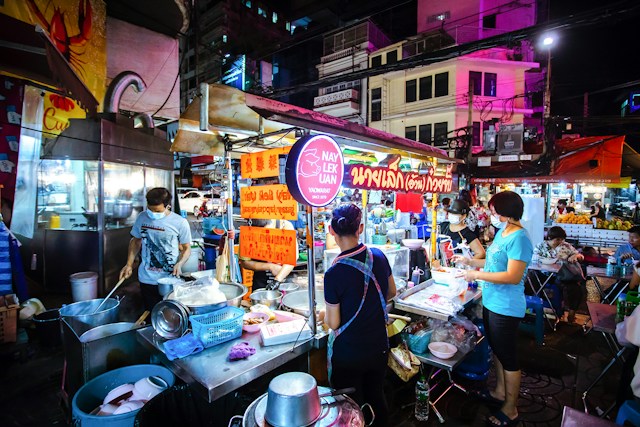
素材写真: Photo by Streets of Food on Unsplash
I often use this as an example in my design thinking classes from the perspective of “multicultural marketing.” It’s an article that presents some excellent case studies, so I highly recommend giving it a read.
Naturally, “stories” change when cultures differ.
The statement, “The key lies in whether a company can seriously commit to redefining its target audience and values, and reconstructing narratives—stories surrounding its products—that resonate locally,” perfectly captures this point.
The Daikin case, in particular, is quite striking. “By genuinely engaging with the challenges faced by countries and regions as a company, Daikin was able to build deep relationships with local stakeholders. As a result, awareness of Daikin as a company also increased. The number of authorized dealers grew from approximately 300 in 2009 to over 10,000 by 2020.”
Of course, with projects of this magnitude, there are certainly aspects that are only possible because of the company’s large scale. However, even before considering scale, there is still plenty that mid-sized companies can do in ASEAN countries. Ultimately, it comes down to their determination to localize as thoroughly as possible.
こちら、私もデザイン思考の授業の中で、「多文化マーケティング」の視点としてよく例に出します。とても良い事例が書かれている記事なので是非どうぞ。
文化が異なれば、当然「ストーリー」も変わるものです。
「ターゲットや価値の再定義、現地で響くナラティブ(商品をめぐる物語)の再構築といった自社商品の捉え直しに、本気で取り組めるかがカギになります」は、この辺りをまさにうまく言い表していますね。
特に、ダイキンのケースはなかなか鮮やかです。「国や地域が抱えている課題に企業として本気で寄り添うことで、ローカルのステークホルダーと深い関係を構築できました。その結果、ダイキンという企業の認知度も向上。取り扱い販売店は09年の約300店から、2020年には1万店を超えるまでに成長したのです。」
もちろん ここまで大型のプロジェクトになると、企業規模が大きいからできるということもあるでしょう。ただ、規模を問う前にも中堅企業がASEAN各国できることはまだまだたくさんあります。要は、どこまで本気でローカライズできるかの覚悟です。